The buyer intent data market is large and getting larger, estimated at $4.5 billion in 2026 (MarketsandMarkets). Most of that money buys third-party signals: which companies are researching your category somewhere on the internet. The cheapest and most reliable signal sits closer to home and costs nothing extra - the analytics on the document you already sent.
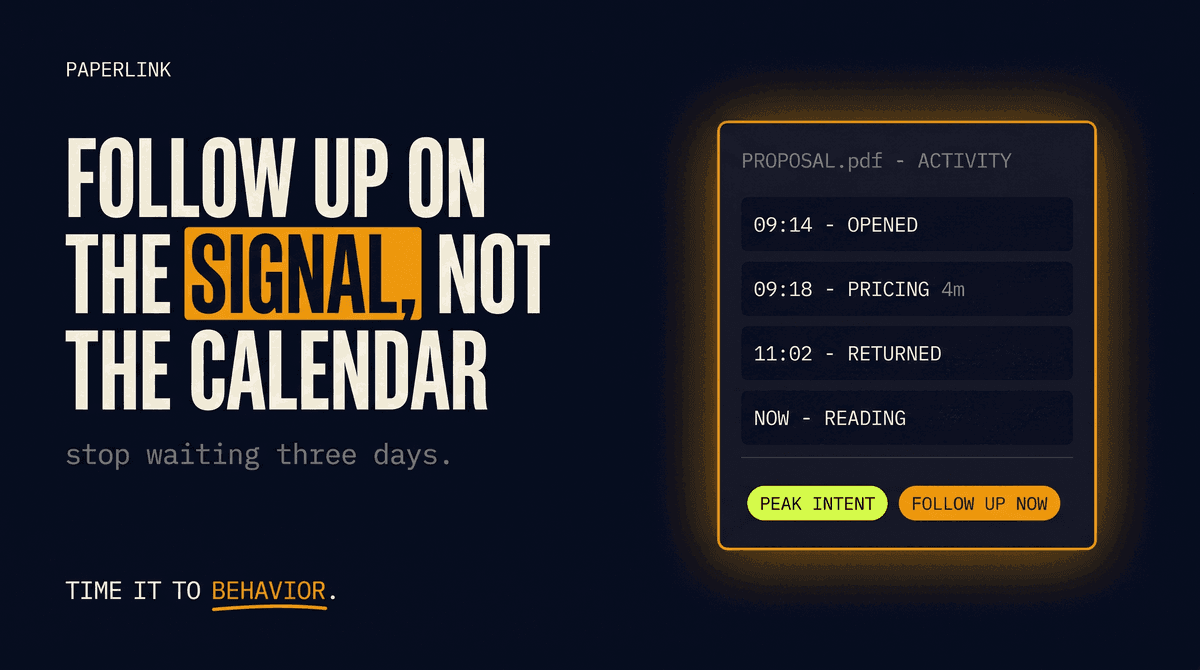
When you share a proposal, pitch deck, or contract as a tracked link, every interaction becomes a first-party intent signal. Not "this account is in-market somewhere," but "this specific person opened your document twice today and spent four minutes on the pricing page." That is a sharper signal than any data broker can sell you.
The catch is that raw analytics do not interpret themselves. A list of timestamps and page durations means nothing until you know what each pattern points to. Here are seven signals worth reading, and the move each one suggests.
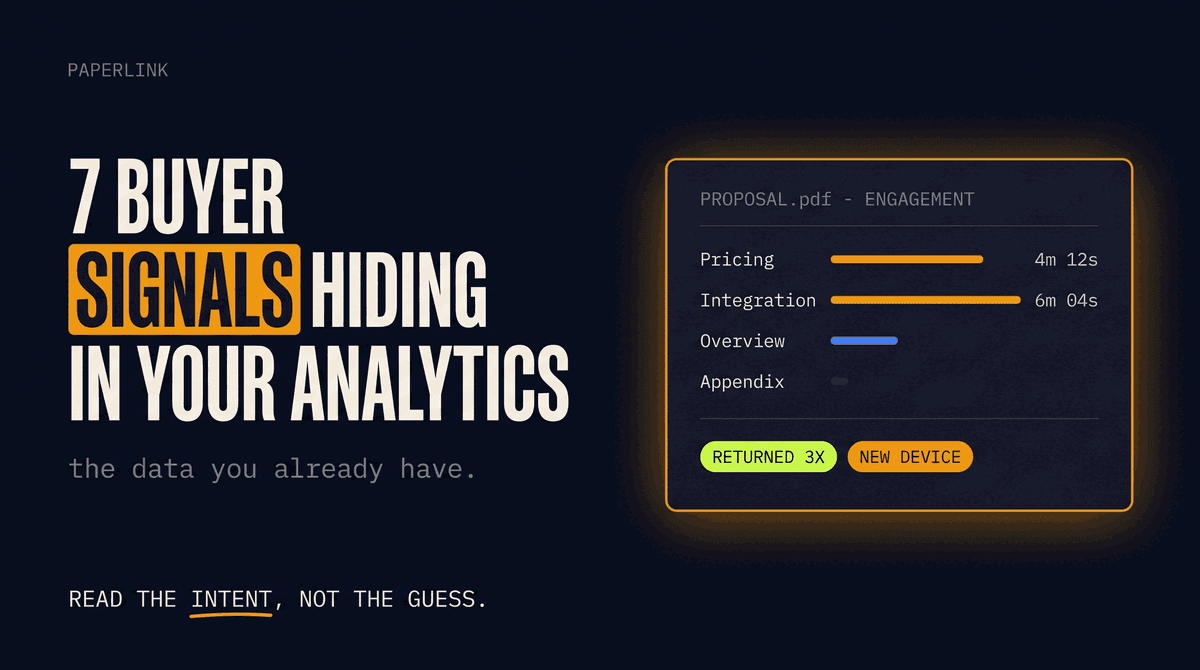
1. Returned Three or More Times
A single open tells you the document arrived. Repeated opens tell you it is being considered. When someone returns to the same document three times over a few days, they are either building a case internally or weighing the decision seriously.
What to do: Follow up soon after the most recent return, while the document is fresh in their mind. Reference the specific content rather than sending a generic check-in.
2. Long Time on the Pricing Page
Across business documents, the pricing section consistently draws the most attention. When a viewer spends several minutes there and seconds everywhere else, cost is the question on their mind - not the features, not the case studies.
What to do: Lead your follow-up with value and ROI, not a re-explanation of what you deliver. If the price needs context, this is the conversation to have it in.
Put pricing on its own page. When it is isolated, you can see exactly how long someone studied it and whether they came back to it. Bundled into a longer section, that signal disappears.
3. A View From a New Location or Device
You sent the document to one person. A second session appears from a different city or a different device a day later. That usually means your contact forwarded it internally - to a manager, a co-founder, a board member, or finance.
What to do: This is a positive signal. The document is moving through the organization. Ask your contact directly whether others are reviewing it, which opens a conversation about who the real decision-maker is.
4. Opened, Under 30 Seconds, Never Returned
A quick open followed by silence is not interest. They clicked the link, glanced at the first page, and closed it. The timing was wrong, the opening did not hook them, or the priority sits elsewhere.
What to do: Do not push hard. Wait a few days, then reach out with a different angle or a more specific question about their priorities, rather than nudging them to read.
5. Heavy Time on One Specific Page
The viewer spent six minutes on page seven and skimmed the rest. That page holds something they care about - a concern, a question, or the part that matters most to their decision.
What to do: Open your next conversation with that topic. "I noticed the integration section drew the most attention - happy to walk through how that works" lands far better than a generic follow-up.
6. High Completion Rate, Slow Pace
Some viewers open a document and read all of it, page by page, at a deliberate pace. A high completion rate combined with a long session is the profile of someone doing genuine diligence, not skimming.
What to do: Treat this as a serious evaluator. The follow-up should match their depth - offer detail, references, or a working session rather than a one-line nudge.
7. Multiple Stakeholders, Different Pages
When several people view the document and each focuses on a different section, you are seeing a buying committee at work. The CFO lingers on pricing, the operating lead studies the implementation plan, the technical reviewer reads the security page.
What to do: Tailor your outreach to each role. A single generic follow-up wastes the intelligence the analytics gave you. Where you can, send a separate link to each stakeholder so the attention is attributed cleanly.
PaperLink tracks page-by-page engagement on shared documents - time per page, return visits, viewer location and device, and completion rate. These are the raw signals the seven patterns above are built on. See Track Who Viewed Your Shared Documents for the full breakdown.
The Mistake That Cancels Every Signal
There is one way to waste all of this: telling the buyer you can see it. "I noticed you opened this four times" reads as surveillance, not attentiveness. The signals are for your timing and your framing, not for the buyer to hear about.
Use the data to decide when to call and what to lead with. Keep the source to yourself. The goal is a follow-up that feels well-timed and relevant, which is exactly what the analytics let you produce without ever mentioning them.
From Signal to Action
First-party document signals beat purchased intent data on two counts: they are free, and they are precise to the person, not the account. The companies getting the most from intent data in 2026 start with their own first-party signals before paying for third-party feeds (MarketsandMarkets). The document you send today is one of those signals, if you track it.
Send your next document as a tracked link. For a deeper follow-up playbook built specifically around proposals, see How to Know If a Client Read Your Proposal.