The standard advice on follow-up timing is a calendar rule. Wait three to five business days, send a nudge, wait another week, send a second, cap the sequence at three or four emails (Prospeo). It is reasonable advice, and it is what most salespeople follow.
It is also blind. A fixed schedule treats every prospect the same, whether they read your proposal twice last night or never opened it at all. The calendar tells you when a polite interval has passed. It tells you nothing about whether this is the right moment to reach out.
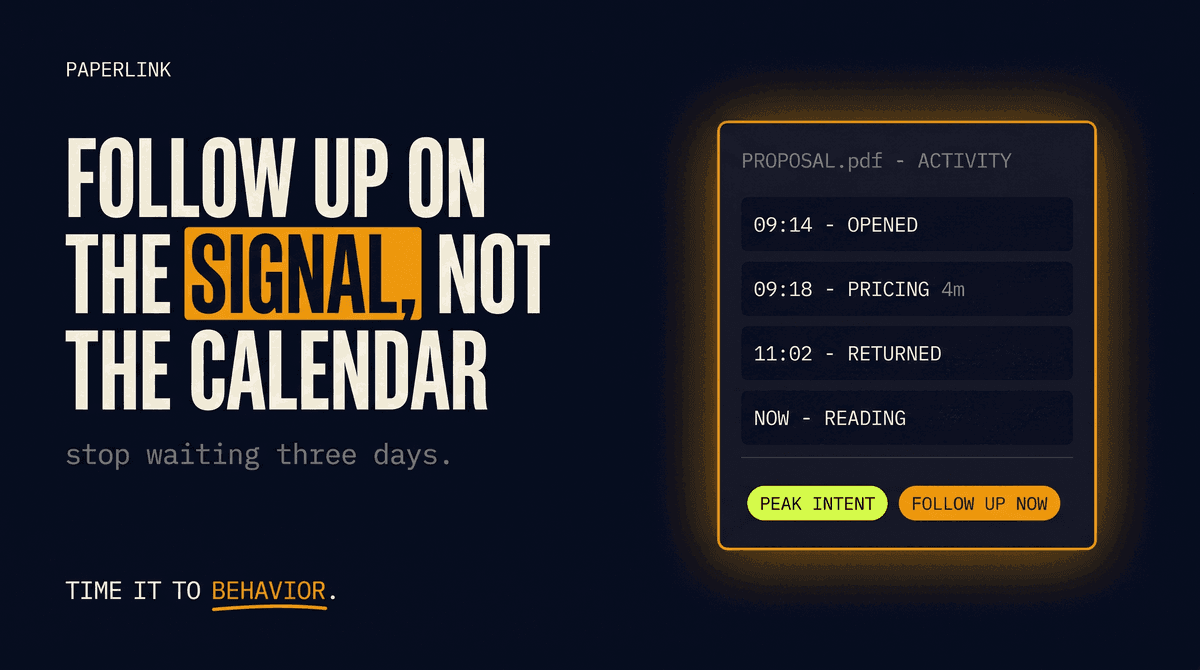
When you send a proposal as a tracked link, you can replace the calendar with a signal. The question stops being "has it been three days?" and becomes "what has the prospect actually done with this document, and what does that say about when to call?" This article is about timing the follow-up to behavior, not to the clock.
Why the Calendar Rule Misses
The three-day rule exists because, without data, time is the only variable you can measure. You do not know if the prospect read the proposal, so you wait a respectful interval and hope.
The problem is that the optimal moment to follow up has almost nothing to do with how long it has been since you sent the document. It has to do with engagement. A prospect who read your proposal carefully an hour ago is at peak interest now, not in three days. By the time your scheduled follow-up arrives, the moment has cooled and a competitor may have called.
The reverse is also true. A prospect who has not opened the proposal after a week does not have a timing problem you can fix with another email to the same thread. The follow-up rule says "send a second nudge." The signal says "the email never landed - change the channel."
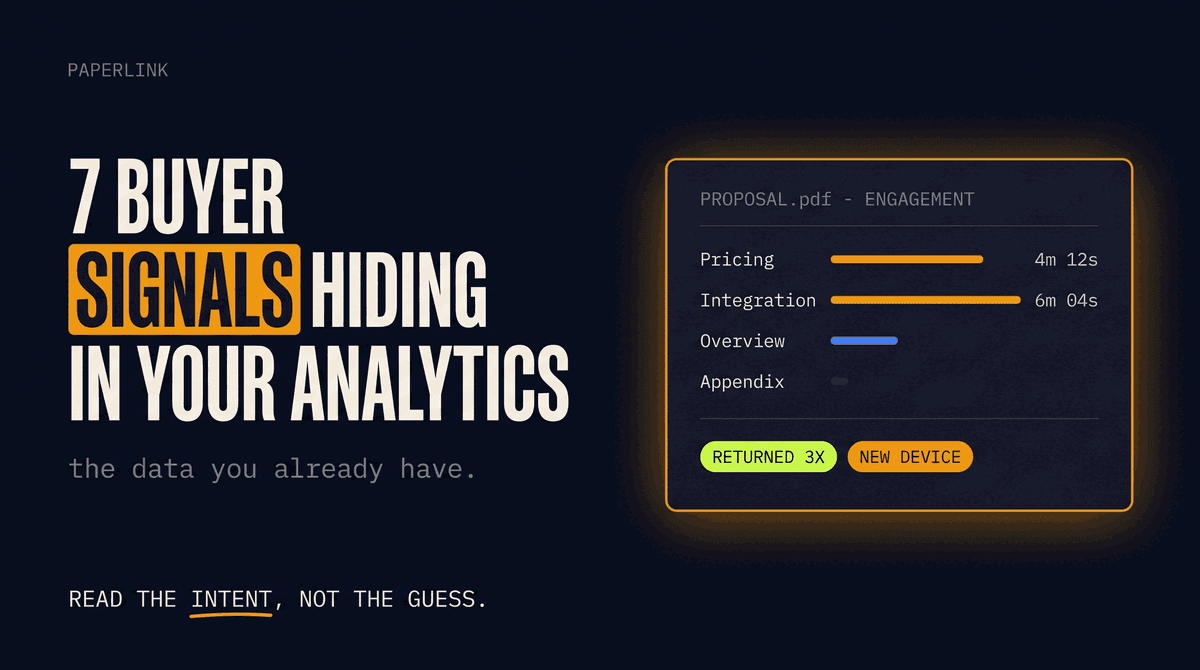
PaperLink shows when a shared document was opened, how long the viewer spent, and whether they returned. That turns follow-up from a calendar decision into a signal decision. For what each behavior pattern means, see 7 Buyer Signals Hidden in Your Document Analytics.
Time the Follow-Up to the Signal
Here is how the timing changes once you can see engagement. Each case pairs a behavior with a window.
Read carefully today, possibly returned. Follow up the same day or first thing the next morning. This is the highest-intent window in the entire cycle, and it closes fast. Waiting the standard three days here is the most common and most expensive timing mistake.
Opened, moderate engagement, no return. Give it two to three days. They saw it and did not act, which usually means it is competing with other priorities rather than rejected. A short, specific follow-up after a brief pause works better than same-day pressure.
Opened once, under a minute, no return. Do not rush a second touch. The proposal did not land, and a fast follow-up reads as needy. Wait three to four days, then change your angle rather than repeating the same ask.
A new viewer appeared. Someone forwarded it internally. Follow up within a day or two, while the document is circulating, and frame your message for more than one reader.
Never opened after five to seven days. Stop emailing the same thread. The message was buried or misrouted. Switch channels - a call, a LinkedIn message, or a resend with a different subject line. More emails into a dead thread only push you toward the spam folder.
The hardest discipline is not following up too late. It is following up too early. If the analytics show the prospect is reading the proposal right now, wait until the session ends. Calling mid-read interrupts them and wastes your best moment. Let them finish, then reach out the next morning.
Respect the Stated Timeline First
Signals do not override what the prospect told you. If they said "we decide at the board meeting on the 15th," that date governs, not their reading behavior. Following up the day after they read the proposal, when they explicitly asked for two weeks, reads as pushy regardless of the analytics.
Use engagement data to time follow-ups within the window the prospect gave you, not to ignore it (Offorte). The signal tells you the best moment inside the agreed timeline. It does not give you permission to jump it.
Know When to Stop
Timing also governs when to walk away. The consensus across sales literature is to cap a follow-up sequence at three to four touches, because response rates fall and spam complaints rise sharply after that (Prospeo).
Analytics make that cap easier to apply with judgment. A prospect who keeps opening the proposal but does not reply has earned more patience than one who never opened it at all. Same number of unanswered emails, very different situations. Let the engagement, not just the count, decide when the sequence is over.
The Shift From Calendar to Signal
Following up on a schedule is following up blind. You send on day three because three days passed, not because anything happened. Following up on a signal means reaching out when the prospect's behavior says the moment is right - same day for a careful read, a different channel for a week of silence, patience for a stated timeline.
The calendar rule is a fallback for when you have no information. Track the document, and you no longer need the fallback.
Send your next proposal as a tracked link. For the full set of behavior patterns and what they mean, see 7 Buyer Signals Hidden in Your Document Analytics. For a proposal-specific follow-up playbook, see How to Know If a Client Read Your Proposal.