A letter of intent is the moment a conversation becomes a deal. You have agreed on a price range, a structure, a rough timeline, and now you put it in writing. Then you email the PDF to the other side's counsel and wait.
The waiting is the hard part. A letter of intent is non-binding on most terms, so silence tells you nothing. Did the buyer's principal actually read it, or is it sitting unopened in a lawyer's inbox? Did the seller study the exclusivity clause and go quiet because it is a problem? Are three partners reviewing it right now, or has the deal already cooled?
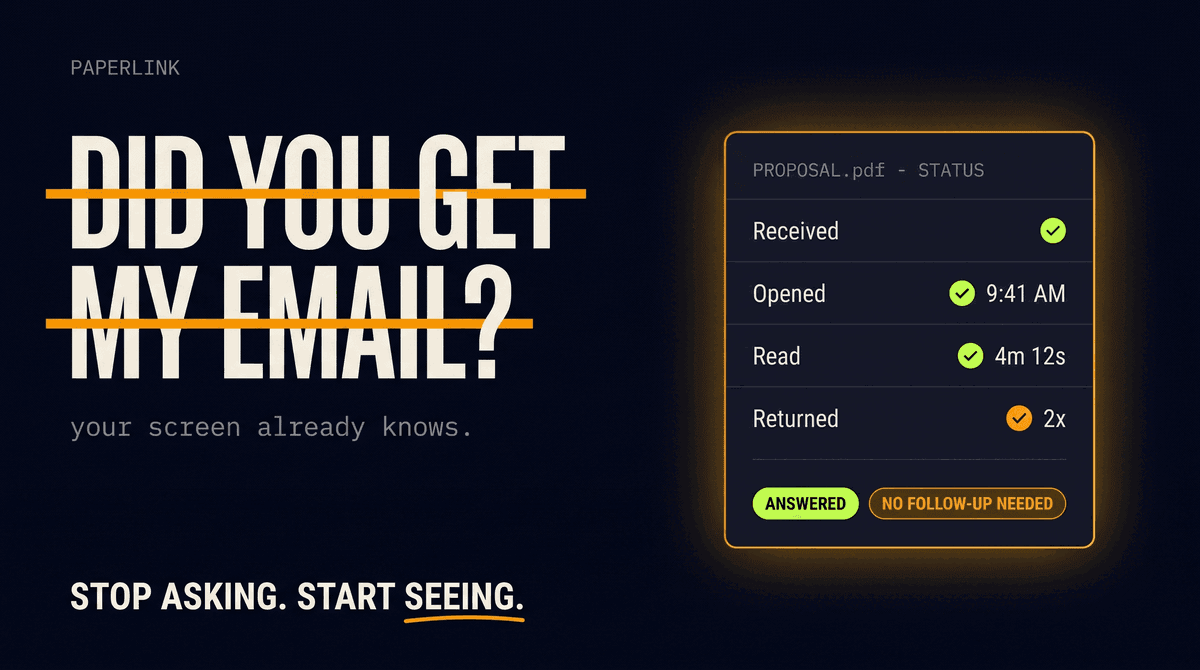
Most teams answer these questions by guessing, then calling at an awkward moment. There is a better way. When you send the LOI as a tracked link instead of an attachment, you see exactly when it was opened, which sections held attention, and whether the other side is still engaged - before anyone picks up the phone.
Why an Unread LOI Stalls Deals
The letter of intent sets the tempo for everything that follows. It defines what is being acquired, for how much, under what conditions, and it usually triggers an exclusivity period and the start of due diligence. Once both sides sign, the real work begins.
The gap between sending the LOI and getting a signed copy back is where deals quietly die. A founder selling their company sends an LOI on a Thursday. By the following Wednesday, nothing. The instinct is to send a polite nudge, but a nudge sent into silence is a guess. You do not know if the other side is negotiating internally, comparing your terms against another offer, or has simply not opened the file.
An email attachment gives you none of this. Once you hit send, the document leaves your control. You cannot see whether it was opened, forwarded to a board member, or printed and ignored. For a document that governs the next ninety days of a transaction, that blindness is expensive.
Send the LOI as a Tracked Link
The mechanics are simple. Instead of attaching the PDF, you upload it to a document platform, generate a link, and send that. The other side clicks the link and reads the LOI in their browser. Nothing to install, nothing to download. The difference is that every interaction with the link is recorded.
PaperLink tracks page-by-page engagement on shared documents: who opened the link, when, from which country and device, how long they spent on each page, and whether they returned. For a letter of intent, that turns a silent waiting period into a readable signal.
You learn three things an attachment can never tell you:
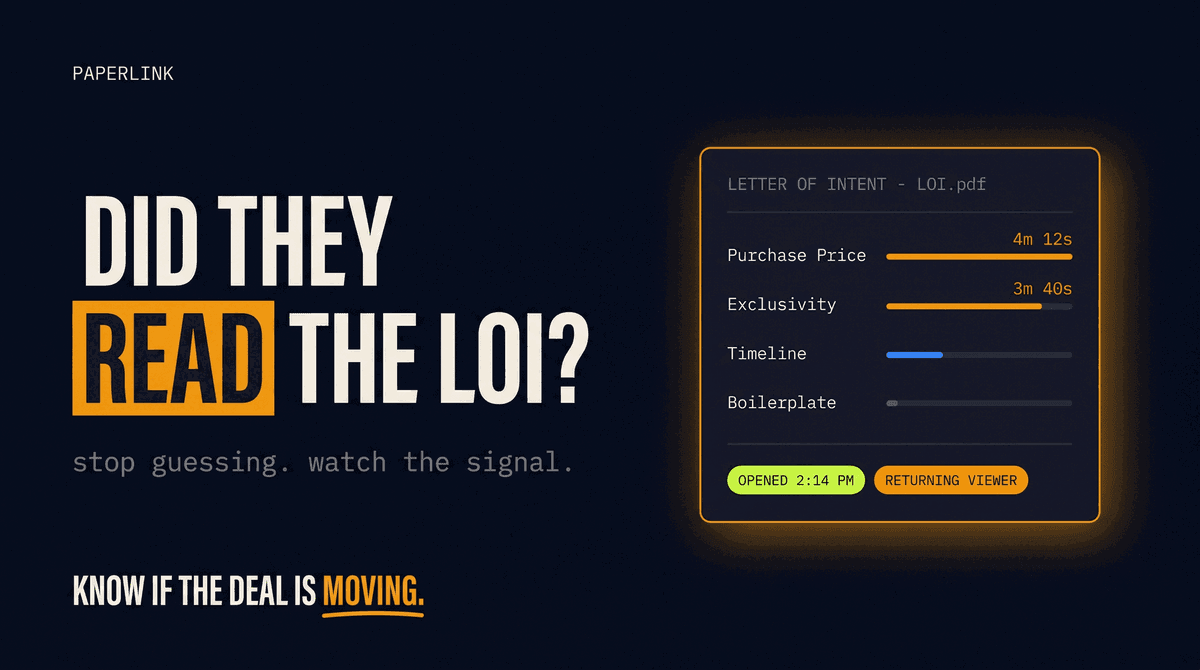
- When the LOI was opened - the exact timestamp, not a guess based on how long it has been since you sent it
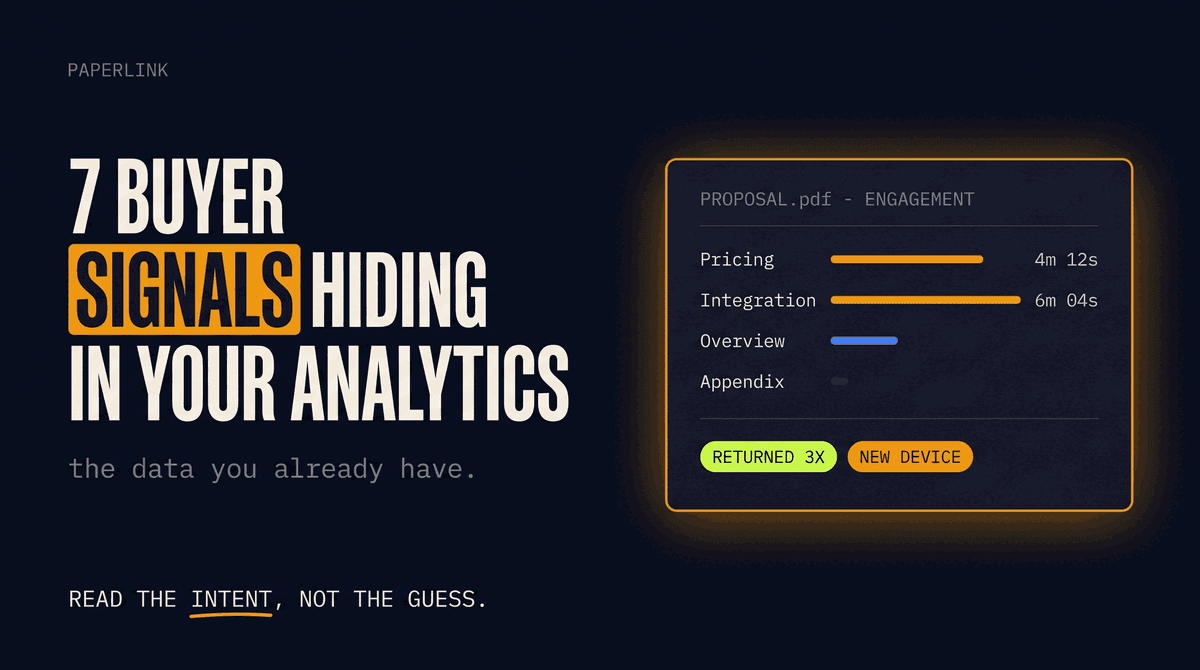
- Which terms received the most attention - if the other side spent four minutes on the purchase price and exclusivity sections and skimmed the rest, you know where the negotiation will happen
- Whether it spread internally - a second view from a different location or device usually means the document reached another decision-maker, such as a board member or an outside advisor
Page-level analytics turn a binary "opened or not" into a map of attention. For a full breakdown of what gets tracked on a shared document, see Track Who Viewed Your Shared Documents.
Reading Engagement Signals on a Letter of Intent
The data only matters if you act on it. A letter of intent produces a few recognizable patterns, and each one points to a different next move.
Opened quickly, long time on price and exclusivity. The other side is taking it seriously and is focused on the terms that matter most. This is the strongest early signal in a deal. Follow up within a day, and lead with the section they studied rather than a generic check-in.
Opened, brief skim, no return. They glanced at it. Either the timing is wrong or one headline term is a non-starter. Wait two or three days, then ask a direct question about their priorities instead of nudging them to read.
A second viewer from a new location. The LOI moved up the chain. A principal forwarded it to a co-investor, a board member, or counsel. This is a positive sign that the deal is being socialized internally. Your next conversation should account for more than one perspective.
Repeated opens, no response. The other side is deliberating, comparing, or waiting on internal approval. A short, specific message works here: offer to clarify a single term rather than asking for a general update.
Never opened after several days. The email was buried, flagged, or routed to the wrong person. Resend through a different channel or confirm you have the right recipient. Do not send a third email into the same thread.
If you are negotiating with a buyer who has several stakeholders, send a separate link to each one. Each link tracks engagement independently, so you can see that the CFO studied the financial terms while the operating partner focused on the transition plan.
Controls That Matter for a Confidential LOI
A letter of intent is sensitive. It contains the price, the structure, and often a confidentiality clause of its own. Sending it as a tracked link adds control that an attachment cannot offer.
| Control | Why it matters for an LOI |
|---|---|
| Email verification | The recipient enters their email before viewing, so you see who actually opened the document rather than an anonymous session |
| Link expiration | Tie the link to the offer window, so the document stops being accessible after the LOI lapses |
| Block downloads | Keep the terms in the browser viewer, so the draft is not saved or forwarded as a loose file |
| Password protection | Add a second layer for the most sensitive transactions |
These controls do double duty. They protect the document, and they sharpen the analytics. An email-verified link tells you not just that someone in London opened the LOI, but that it was the acquirer's general counsel.
When the LOI Becomes a Data Room
Signing the letter of intent starts due diligence, and due diligence means sharing far more than one document. The same link-based approach scales from a single LOI to an entire folder of financials, contracts, and corporate records.
A data room with aggregated analytics shows which documents the other side reviewed most closely after signing. If the buyer's team is spending hours on customer contracts and ignoring the IP schedule, you know where their concerns sit before they raise them. The LOI is the first tracked document in a transaction. The data room is the rest of them.
Common Mistakes When Following Up on an LOI
Following up while they are still reading. The analytics show the other side opened the LOI an hour ago and is still in it. Calling mid-review feels intrusive. Wait for the session to end, then follow up the next day.
Treating an open as agreement. Someone opened the LOI for thirty seconds and closed it. That is not engagement. Reaching out as though they have reviewed and accepted the terms gets ahead of where the deal actually is.
Citing the data to the other side. "I saw you opened this four times" reads as surveillance. Use the signal to time and shape your outreach, not to confront the recipient with it.
Sending one link to a committee. When a single link is forwarded internally, you still see each new viewer as a separate session, but you lose the ability to attribute attention to a named person. For multi-stakeholder deals, separate links give you cleaner intelligence.
From Sent to Signed
A letter of intent decides whether a deal accelerates or drifts. Sending it as an attachment leaves you guessing through the most important week of the negotiation. Sending it as a tracked link replaces that guesswork with signal: when it was opened, which terms drew attention, and whether the deal is moving through the other side's organization.
The next document you send in the transaction will be the due diligence package. Start tracking at the LOI, and you carry that visibility through to close.
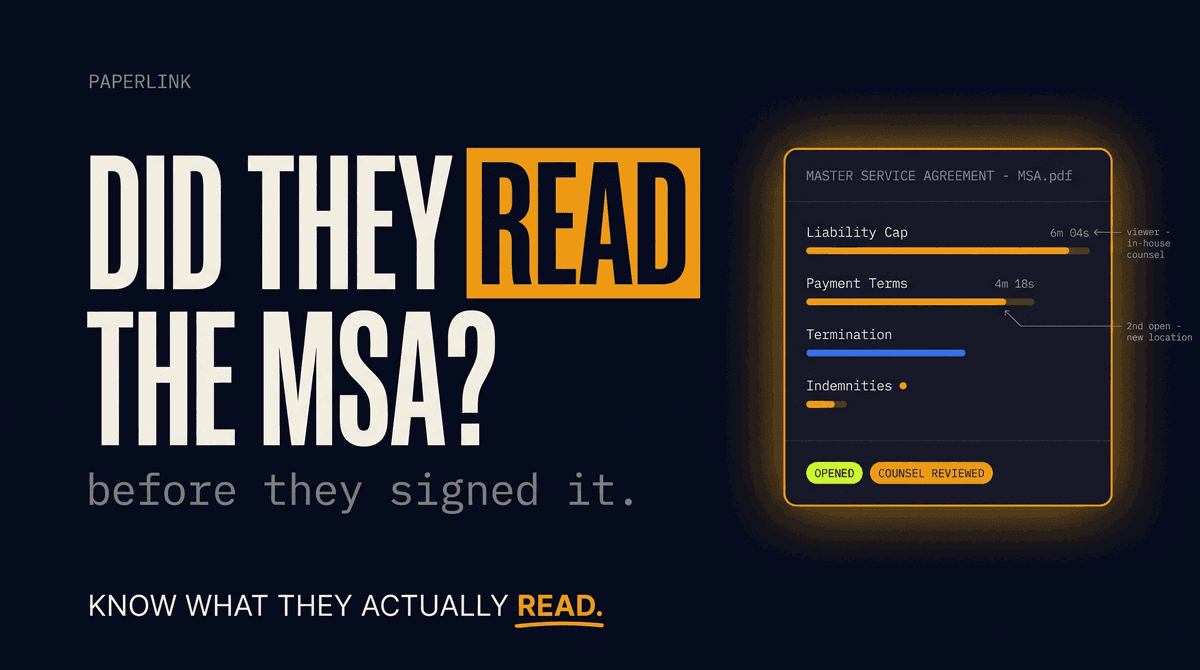
Share your letter of intent as a tracked link. For the contract that follows the LOI, see How to Know If Your MSA Was Read Before It Was Signed. For the due diligence phase, see Virtual Data Room Analytics for Due Diligence.