The PDF attachment was built for a different job than the one we use it for. It was designed to move a file from one inbox to another, once, and then sit there. We use it to run multi-week B2B deals with shifting drafts, multiple stakeholders, and confidential terms. The format was never meant for that, and in sales it is quietly failing.
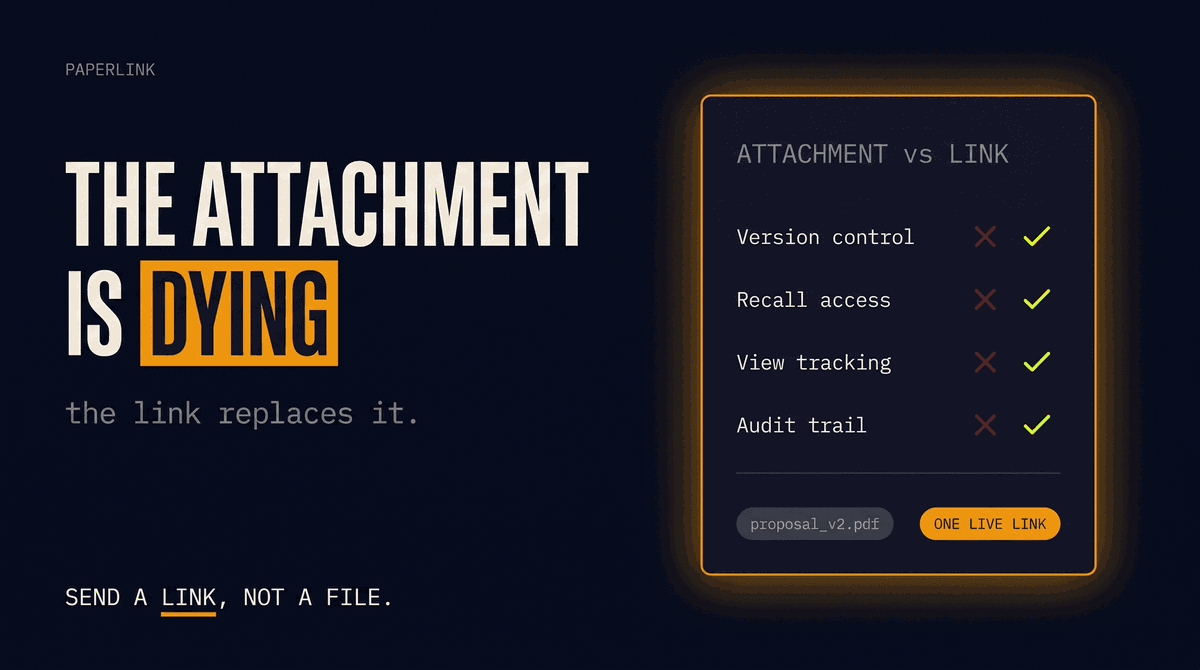
The replacement is not a better attachment. It is the link. Sending a document as a tracked link instead of a file fixes a set of problems that the attachment cannot fix by design, no matter how careful the sender is. Sales teams are making the switch not because links are fashionable, but because the attachment has four structural flaws that cost deals.
The Attachment Forks the Moment You Send It
The most common attachment failure is the version fork. You send a proposal as proposal_v2.pdf. The client opens it, marks it up, and replies referencing "the document you sent." Meanwhile you have moved on to v3. Now two people are discussing two different documents and neither realizes it.
This is not a discipline problem you can train away. The moment a file leaves as an attachment, it becomes a frozen copy that drifts out of sync with reality. Email attachments routinely produce exactly this: one person on version one, another on version two, until someone has to untangle which is current (CloudFiles).
A link does not fork. It points to one document. Update the file behind the link and everyone who opens it sees the current version, because there is only ever one version to see.
You Cannot Recall What You Already Sent
An attachment is irreversible. The instant you hit send, the file exists on a server you do not control, in an inbox you cannot reach, and it stays there. If the pricing changes, if the deal falls through, if you sent the wrong draft, there is nothing to do. The file is gone into the world.
In B2B sales this matters more than it first appears. Proposals contain pricing you may not want a competitor to see. Contracts contain terms you might revise. A confidential deck sent to one prospect can be forwarded to ten without your knowledge. The attachment gives you no way to close the door after it is open.
A link can be expired, password-protected, or revoked. Access remains a decision you keep making, not one you surrendered the moment you clicked send.
You Are Selling Blind
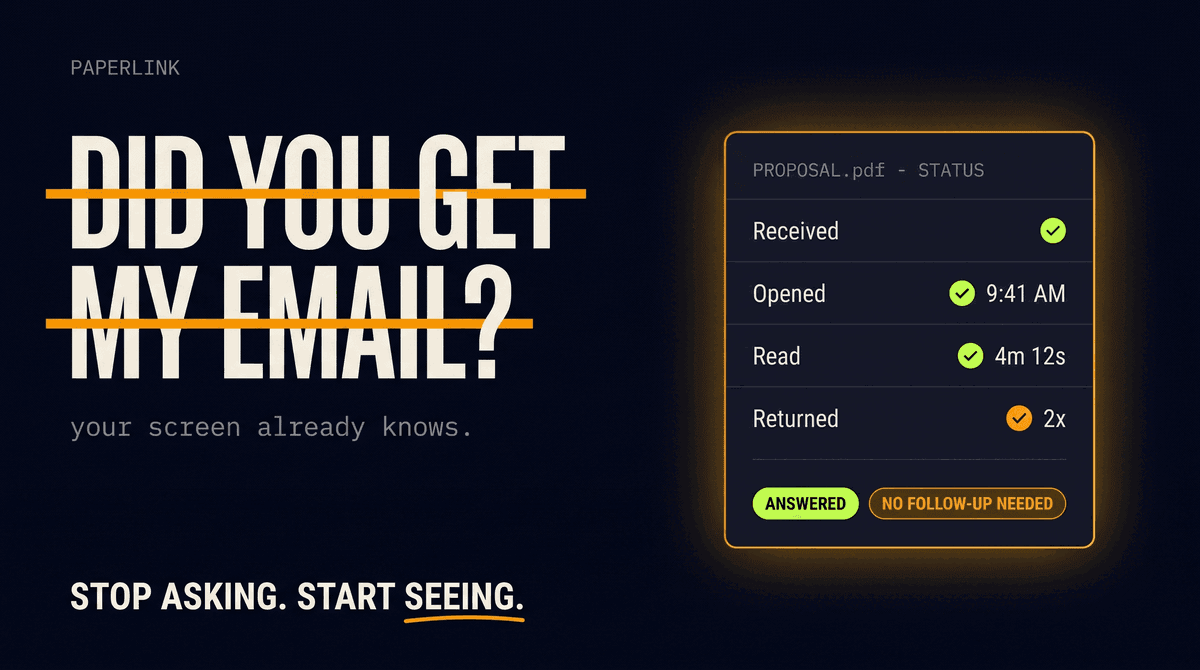
An attachment tells you nothing after it leaves. You do not know if it was opened, read, skimmed, or ignored. Whether the file lacks tracking is the quiet cost: you are selling without knowing what the buyer did with the most important thing you sent them (CloudFiles).
A tracked link reports back. This is a large enough topic on its own that it deserves its own treatment, but the short version is that the link turns a one-way send into a two-way signal.
The shift from blind sending to visible engagement is the larger story behind the move away from attachments. See The End of "Did You Get My Email?" for why that uncertainty is disappearing.
No Audit Trail, No Control
For regulated and high-value B2B work, the attachment leaves no record worth keeping. Who received which version, who opened it, when access was granted or removed - none of it is captured. Link-based portals exist precisely because contracts and sensitive documents need an auditable record of every exchange that an attachment cannot provide (Supportbench).
This is the difference between "I think I emailed them the final version" and a dated record showing exactly what was shared, with whom, and what they did with it.
The Honest Counterpoint
Links are not automatically safer, and saying so would be the kind of overclaim that discredits the argument. Attackers have shifted toward URL-based attacks as file-based defenses improved, and security researchers have flagged the rise in link-driven phishing (Barracuda). A link from an unknown sender is a legitimate thing to be wary of.
The point is not that links are invulnerable. It is that a link from a trusted document platform, sent inside an established sales conversation, gives you control the attachment never could - access rules, version integrity, recall, and a record. The format wins on control, not on being immune to misuse. Used carelessly, any channel can be abused.
What Replaces the Attachment
The attachment is not dying because something flashier arrived. It is dying because it was the wrong tool for a job that grew more demanding than the format could handle. B2B sales now involves shifting drafts, buying committees, confidential terms, and compliance expectations. The attachment answers none of these. The tracked link answers all four.
The change is already underway in sales teams that send documents for a living. The rest will follow for the same unglamorous reason every format shift happens: the new way removes problems the old way could not.
Send your next proposal as a tracked link instead of an attachment. For the security and control side of link-based sharing, see How PaperLink Protects Your Documents.